
AI Marketing Tools Security Review: Singapore Breach Exposes 95,000 Emails
In short
A Singapore retailer exposed 95,364 customer emails after an employee used generative AI to create a bulk-mail script that placed addresses in the visible To field.

The April 2026 data incident at Bee Cheng Hiang demonstrates how prompt errors in AI-generated marketing scripts can expose customer email addresses at scale. An employee used a generative AI tool to produce Python code for sending promotional messages in batches of roughly 1,000 recipients. The script placed every address in the visible To field rather than using BCC or individualized addressing, resulting in 95,364 unique emails disclosed.
Incident Details and Root Cause
On April 25, 2026, the company executed the script for the first time. Recipients in each batch could view up to 999 other addresses. No other personal data fields were involved, and investigators found no subsequent misuse of the exposed addresses. The company notified Singapore’s Personal Data Protection Commission (PDPC) two days later and published the details on September 21 after completing its investigation.
The root cause was human error in the AI prompt. The employee requested code for “mass email using a local list” but omitted any instruction to conceal recipient identities from one another. The script was reviewed only through activity logs; no test messages were opened to verify header behavior. This marked the first AI-related breach formally notified to the PDPC.
The retailer halted the campaign immediately, corrected the script, and notified all affected customers. It also introduced a mandatory double-verification process requiring at least two staff members to approve any future bulk email before deployment.
PDPC Requirements and Governance Measures
PDPC accepted a voluntary undertaking from the company on September 2, 2026. The undertaking imposed a structured AI coding governance framework rather than a monetary penalty. Key obligations include independent technical review of any code that processes personal data, adoption of a secure software development lifecycle, and mandatory pre-deployment testing with dummy accounts.
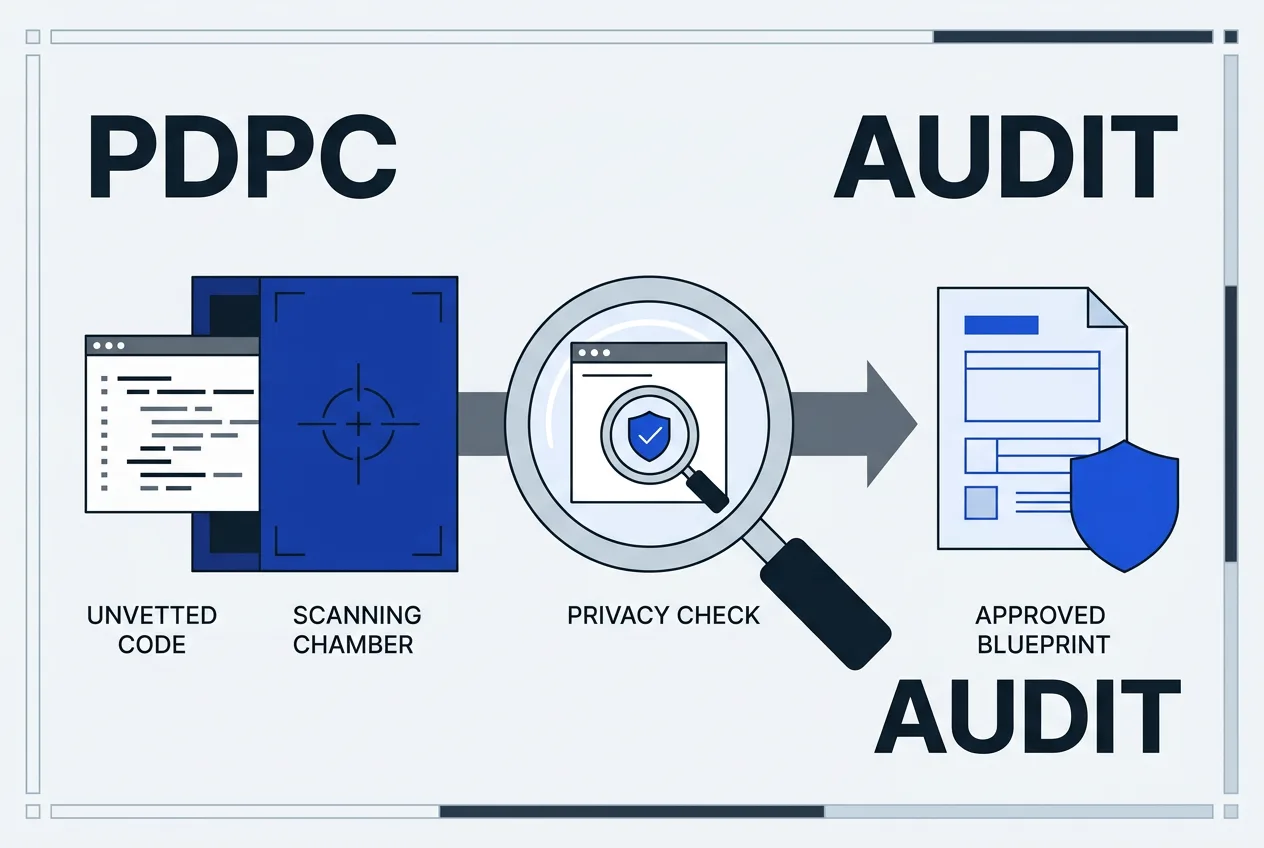
Additional controls require automated technical blocks that prevent multi-recipient addresses from appearing in the To field during bulk sends. Staff must complete formal data-protection training, and the company must maintain documented breach-response procedures. PDPC recommended that organizations perform data protection impact assessments before adopting generative AI tools for operational tasks.
- Independent code review for personal-data processing
- Secure development lifecycle with documented testing
- Pre-deployment validation using dummy recipient lists
- Automated prevention of visible multi-recipient To fields
- Staff training on data-protection obligations
These measures address the gap between rapid AI code generation and the verification steps traditionally applied to custom scripts. Organizations using similar tools for marketing automation now face clearer expectations around prompt documentation and output inspection.
| Date | Event |
|---|---|
| April 25, 2026 | Emails sent with exposed addresses |
| April 27, 2026 | PDPC notified |
| September 2, 2026 | Voluntary undertaking accepted |
| September 21, 2026 | PDPC publishes decision |
Implications for AI Tools Security Practices
The case illustrates that AI-generated code for marketing automation inherits the same privacy risks as manually written scripts when developers omit explicit privacy controls. Organizations should treat AI output as untrusted until it passes the same functional and security tests applied to human-written code.
Practical steps include maintaining a library of approved prompt templates that incorporate privacy defaults, logging every prompt used to generate production code, and requiring sign-off from a second technical reviewer before deployment. These controls reduce the chance that a single incomplete prompt will create a systemic exposure.
PDPC’s decision to favor a voluntary undertaking over fines signals that regulators prioritize documented remediation over punishment when companies respond promptly. Future enforcement will likely examine whether similar governance frameworks were in place before an incident occurs.
Frequently asked questions
What caused the Bee Cheng Hiang email exposure?
An employee used a generative AI tool to create a bulk-email script but omitted instructions to hide recipient addresses. The resulting code placed all addresses in the visible To field.
How many addresses were exposed and was any other data affected?
Exactly 95,364 email addresses were disclosed. No other categories of personal data were involved, and investigators found no evidence of further misuse.
What actions did PDPC require after the incident?
The commission accepted a voluntary undertaking that mandates independent code review, secure development lifecycle practices, pre-deployment testing, automated blocks on visible multi-recipient fields, and staff training.
Does this case impose new fines on companies using AI for marketing?
No monetary penalty was applied. PDPC focused on corrective governance measures rather than fines, provided the organization implements the required controls and verifies compliance.
TrustScope
Comments 6