
eMudhra Review: Key Weakness Forces Exit from Global TLS Business
In short
Eight eMudhra intermediate CA keys generated with insufficient randomness led to immediate browser blocks and the company's withdrawal from global TLS issuance in October 2026.
In October 2026, eMudhra disclosed that eight intermediate CA private keys contained critically weak values due to a flawed key-generation ceremony. The incident prompted rapid distrust by major browsers and the company's announcement that it would exit the global SSL/TLS certificate market. This eMudhra review outlines the technical details, responses, and practical consequences for organizations that relied on the affected certificates.
eMudhra Certificates and the Generation Flaw
The affected keys were P-384 ECC intermediates issued under the emSign ECC Root CA – G3 on 30 April 2025. They were created on Utimaco FIPS 140-2 Level 3 HSMs during a ceremony that produced secondary keys with entropy reduced to single-byte integers. The eight recovered values were 4, 56, 66, 115, 155, 156, 230, and 237; any of them could be factored in milliseconds. No evidence indicates that end-entity certificates were issued from these intermediates before revocation.
The flaw occurred when a wrap/unwrap test step generated weak keys that were mistakenly used instead of the intended strong keys. eMudhra stated that the error was confined to the key-generation script and that physical and logical controls on production systems remained intact. Indian DSC and eSign operations, regulated separately by the Controller of Certifying Authorities, were not affected. The company revoked the intermediates on 18 October 2026 with the reason code caCompromise.
Researcher Wayne notified Apple, Google, Microsoft, Mozilla, and eMudhra on 17 October 2026 with proof-of-control signatures. Certificate Transparency logs showed no forged certificates issued from the compromised intermediates before revocation.
Browser Responses and Industry Impact
Major browser vendors acted within days. Chrome and Firefox added the intermediates to CRLSet and OneCRL on 17 October. Apple followed on 19 October and Microsoft on 20 October. Mozilla removed the emSign ECC Root CA – G3 from NSS on 20 October; Chrome Root Store v43, scheduled for release around 27 October, will complete removal for Chrome users.
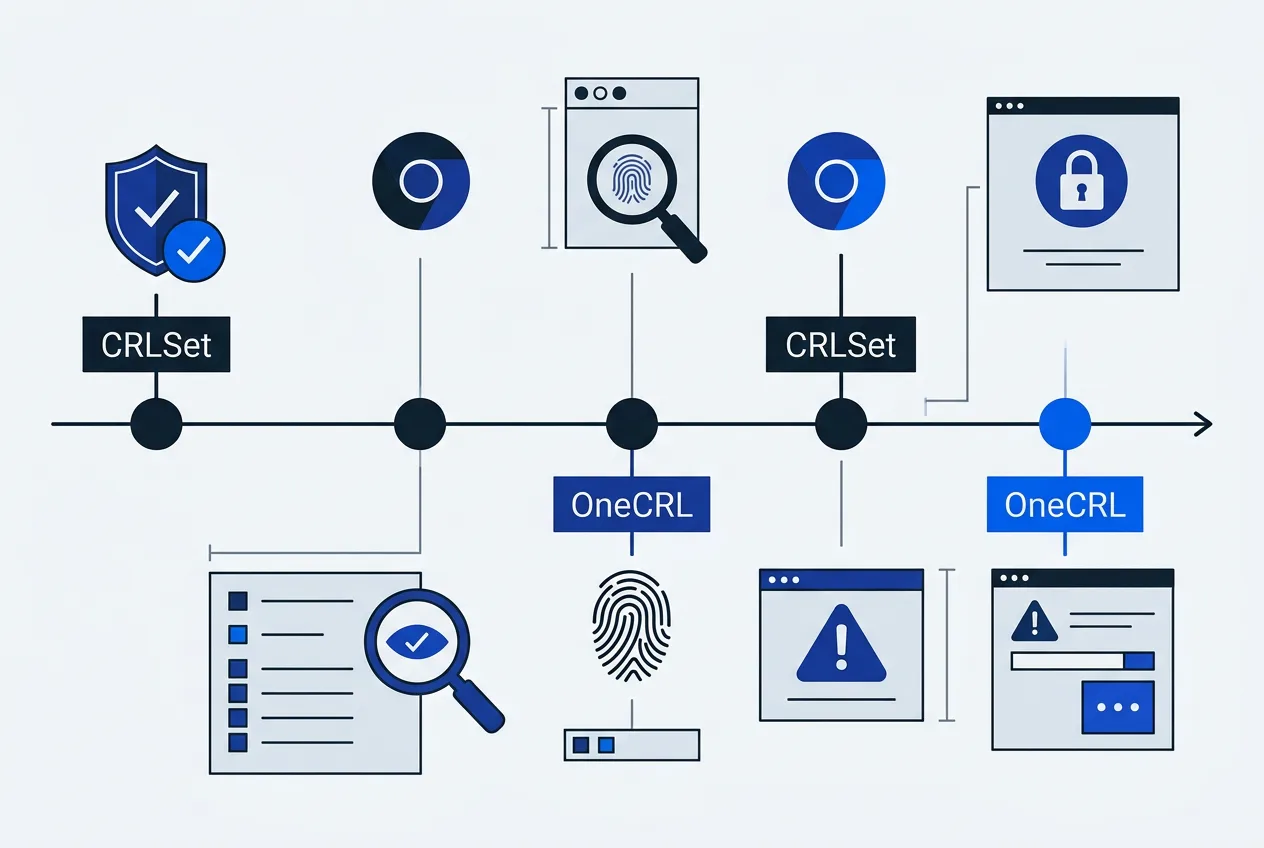
Approximately 30,000 certificates, many from InCommon and ACME automation, chain to the distrusted root and require reissuance. Non-browser clients such as servers, IoT devices, and command-line tools that use static trust stores face breakage until their bundles are updated. Code-signing intermediates carried additional risk of malware signing on unpatched Windows systems, though no confirmed exploitation has been reported.
eMudhra announced on 22 October 2026 that global TLS operations represented about one percent of revenue and that it would exit the business. The company will continue to support its G1 RSA roots during transition, offer Sectigo alternatives, provide free replacements, and maintain revocation services. Indian government and PSU users experienced limited short-term impact because their primary reliance is on domestic DSC services.
Practical Steps After the eMudhra CA Incident
Organizations that hold certificates chaining to the G3 root should identify them through certificate transparency searches and reissue from an unaffected CA. Administrators must update non-browser trust stores to remove the emSign ECC Root CA – G3. Legacy systems without automatic revocation checking remain exposed until manual intervention occurs.
Key dates to track include the 17 October notifications, 18 October revocations, 20 October Mozilla root removal, and the scheduled Chrome removal around 27 October. Full root-cause reports from eMudhra and ongoing CA/Browser Forum discussions will provide additional detail on process improvements required for future ceremonies.
- Scan certificate inventories for chains to emSign ECC Root CA – G3.
- Reissue affected certificates from another trusted CA.
- Update static trust bundles in servers, containers, and embedded devices.
- Monitor revocation services for the revoked intermediates until their expiry.
Frequently asked questions
What caused the eMudhra intermediate key weakness?
A flawed key-generation ceremony on 30 April 2025 produced eight P-384 ECC keys with single-byte values instead of proper random numbers. The error occurred when test keys from a wrap/unwrap step were used by mistake.
Did eMudhra suffer a data breach or hack?
No infrastructure breach occurred. The keys were effectively public from the moment of generation because of insufficient entropy in the ceremony script. Physical and logical controls remained intact.
Which browsers blocked eMudhra certificates?
Chrome and Firefox blocked the intermediates on 17 October 2026. Apple acted on 19 October and Microsoft on 20 October. Mozilla removed the root from NSS on 20 October, with Chrome root removal scheduled around 27 October.
Are eMudhra Indian DSC and eSign services affected?
Those operations run on separate infrastructure regulated by India's Controller of Certifying Authorities and were not involved in the TLS key-generation flaw.
TrustScope
Comments 3