
Mastercard Stablecoin Security review: New Risk Intelligence Tool for Banks
In short
Mastercard launched Stablecoin Security on October 19, 2026, as a platform-agnostic API that screens stablecoin transactions for fraud and sanctions risks before on-chain movement.
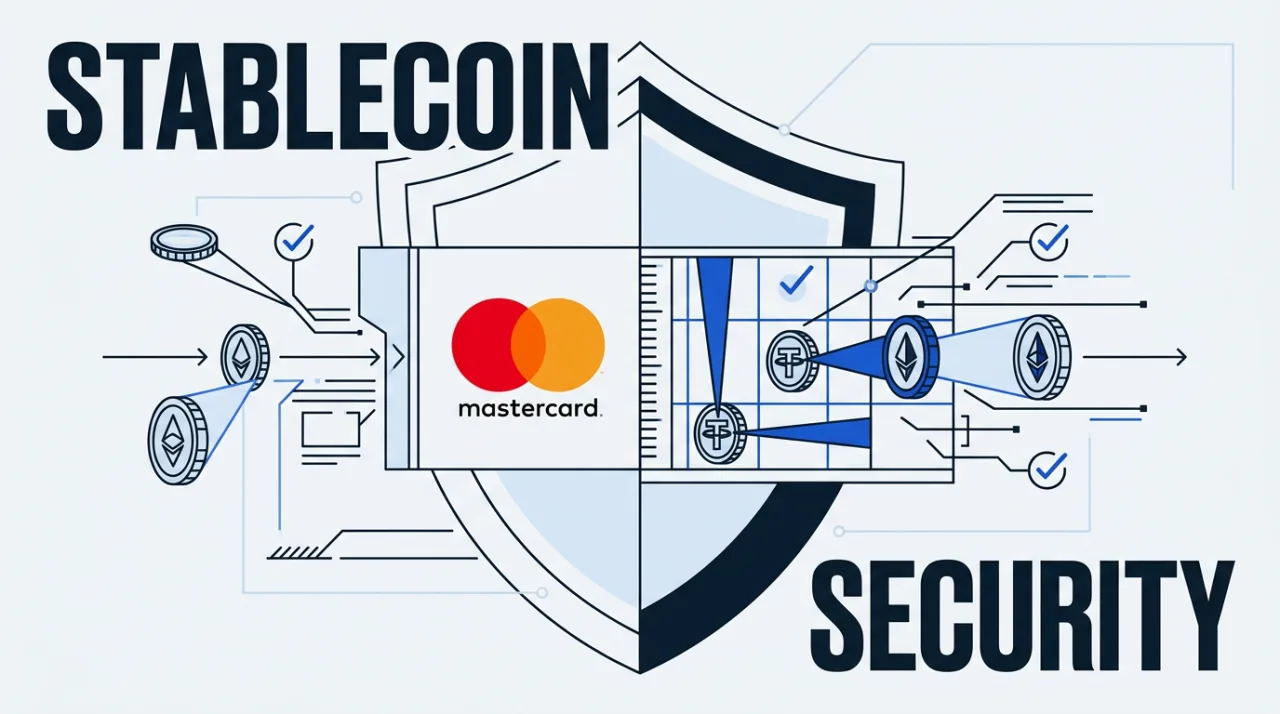
Mastercard introduced Stablecoin Security on October 19, 2026, at Money20/20 USA. The service supplies banks and financial institutions with a risk score for stablecoin payments by combining payment data and blockchain analytics. Institutions receive the score before funds move on-chain, allowing review or blocking of suspect transfers.
The announcement targets growing stablecoin use in cross-border and B2B payments. A BIS study of 593 million stablecoin transfers in 2025 showed nearly 60 percent involved complex, multi-step activity that traditional checks struggle to evaluate. Mastercard positions the new tool as an extension of its existing fraud capabilities into digital asset flows.
How the Stablecoin Security API screens transactions
The API operates independently of any single blockchain or stablecoin issuer. It evaluates transaction context, source of funds, exposure to sanctioned parties, and scam indicators across the full payment lifecycle from fiat initiation to on-chain settlement. Results integrate directly into existing compliance systems without requiring new operational processes.
Signals include wallet history, counterparty data, and patterns drawn from Mastercard’s payment network plus blockchain analytics providers. The system generates a risk score that banks can use to approve, flag, or decline a transfer before it proceeds. Initial rollout focuses on North America, with global availability planned for 2027.
Two early partners, Borderless.xyz and Keyrails, connect the tool to licensed stablecoin providers across more than 113 countries and 72 currencies. Both firms participated in Mastercard’s Start Path Blockchain program. Mastercard acquired BVNK in August 2026 and intends to use that infrastructure for further expansion.
Comparison with prior Mastercard crypto tools
Stablecoin Security builds on earlier Mastercard offerings such as Crypto Secure and Crypto Credential. The table below highlights key differences in scope and timing.
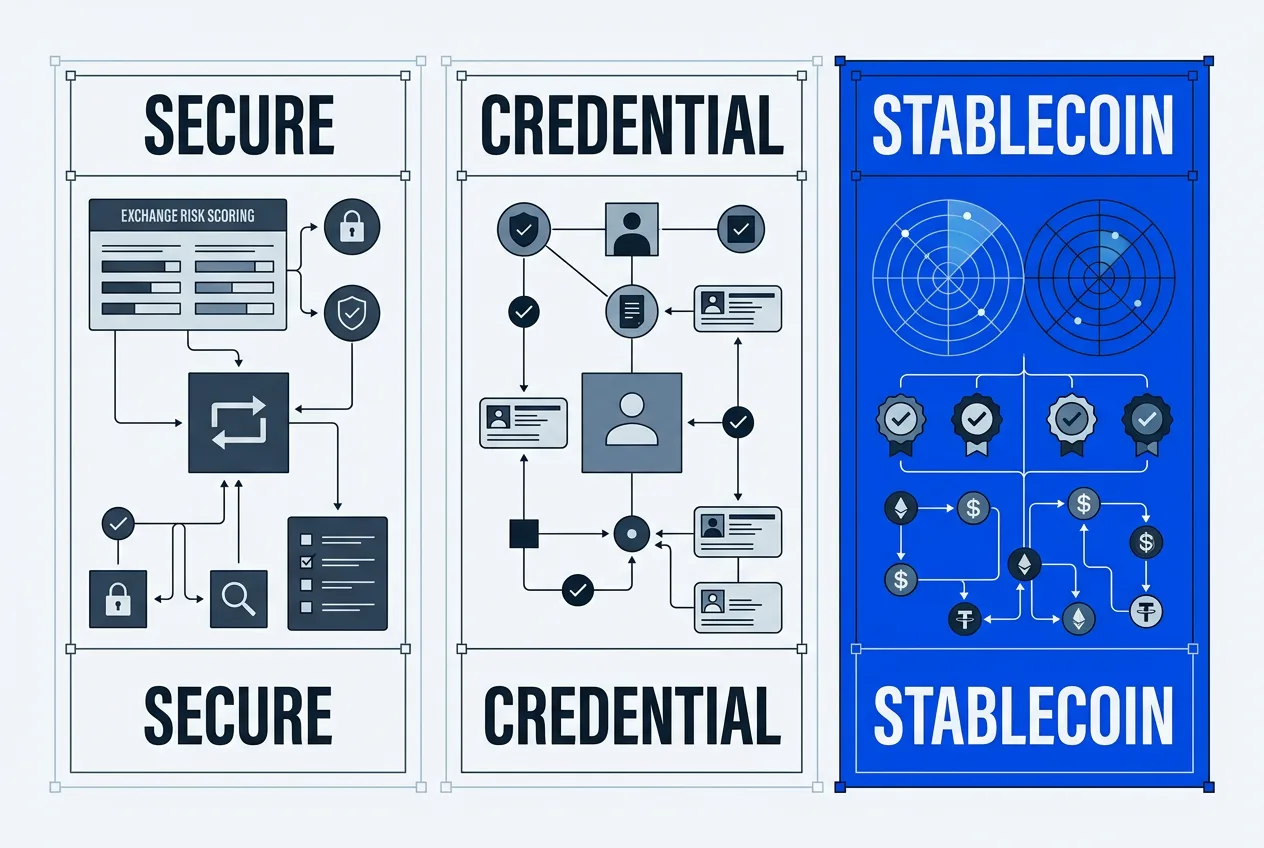
| Tool | Focus | Launch | Stablecoin coverage |
|---|---|---|---|
| Crypto Secure | General crypto fraud detection | Pre-2026 | Limited |
| Crypto Credential | Wallet verification | Pre-2026 | Limited |
| Stablecoin Security | Pre-settlement risk scoring | October 2026 | Full lifecycle |
Ann Johnson, EVP Security Solutions at Mastercard, stated that financial institutions need combined payment and blockchain insights to handle digital asset payments with confidence. No performance metrics or adoption figures have been released yet. Banks evaluating the service should review integration requirements and data-sharing terms directly with Mastercard.
Practical steps for institutions considering the tool
Banks can begin by mapping current stablecoin exposure against the signals the API evaluates. Typical next steps include requesting a technical briefing from Mastercard, testing the API against sample transaction sets, and confirming how risk scores align with internal policy thresholds.
Institutions should also assess data retention policies and how the service interacts with existing sanctions screening vendors. Because worldwide commercial availability is scheduled for 2027, organizations outside North America may need interim manual processes or alternative solutions.
Keyrails focuses on high-value cross-border trade, while Borderless.xyz targets licensed stablecoin corridors. Reviewing partner documentation helps clarify coverage for specific currencies and regions. As stablecoin volumes rise, the tool’s ability to flag complex multi-step flows before settlement offers one concrete mechanism for managing on-chain exposure.
Frequently asked questions
What data sources does Mastercard Stablecoin Security combine?
The API merges Mastercard payment network data with blockchain analytics to evaluate transaction context, source of funds, sanctions exposure, and scam indicators before on-chain movement.
When will the tool become available outside North America?
North American launch began in October 2026. Worldwide commercial availability is expected in 2027, supported by the BVNK acquisition.
Does the service replace existing compliance systems?
No. It generates risk scores that integrate into current fraud and compliance workflows without requiring a separate operating model.
Which partners are using the tool first?
Borderless.xyz and Keyrails, both participants in Mastercard’s Start Path Blockchain program, serve as initial integration partners.
TrustScope
Comments 2