
Binance Security Review After October 2026 Record $6.3 Billion Hot Wallet Incident
In short
The October 2026 hot wallet drain exposed Binance to its largest theft on record, yet the exchange covered losses from its own reserves and resumed operations within days.

Binance faced its largest recorded theft on 29 October 2026 when attackers removed roughly $6.3 billion from hot wallets across ten blockchains in under an hour. The company responded by halting withdrawals, replenishing user balances from corporate reserves, and publishing a new Proof of Reserves snapshot within 48 hours. This review details the attack path, recovery measures, and remaining questions for users evaluating platform safety.
What Happened During the October 2026 Binance Hot Wallet Breach
Attackers began draining assets at approximately 20:05 UTC on 29 October. They compromised an internal wallet signing service after months of targeted access that started with a spear-phishing campaign against a DevOps engineer. No private keys left Binance systems; instead, the attackers used 50 pre-signed EIP-7702 authorizations on the Ethereum hot wallet labeled “Binance 14” to move more than $2.5 billion in a single transaction. Similar sweeps hit Bitcoin, Tron, XRP Ledger, and Solana holdings, with the total loss estimated between $6.3 billion and $6.4 billion by Binance, TRM Labs, and Chainalysis.
The FBI attributed the operation to North Korea’s TraderTraitor group on 31 October. Binance confirmed deposits remained unaffected while withdrawals were paused. The exchange immediately set aside more than $6.34 billion from its SAFU fund, futures insurance pool, Bitcoin reserves, and corporate treasury. By 31 October, 90 to 98 percent of affected tokens had been restored, and a fresh Proof of Reserves snapshot at 00:00 UTC that day showed 100 percent or greater backing for ten major assets, verifiable via zk-proofs.
Recovery Actions and Service Restoration
Withdrawals resumed in phases beginning 1 November 2026, starting with Bitcoin and expanding to Ethereum, USDT, USDC, and fifteen additional networks. Billions in outflows processed within the first hours, with net movement reported near $3.6 billion. Binance replaced compromised internal systems, added AI-based anomaly detection, and strengthened device security controls. Tether and Circle froze roughly $2.59 billion in USDT and USDC, while other issuers and partners intercepted additional funds.
Binance stated it will absorb all losses through company funds rather than user accounts. Independent cybersecurity firms are conducting a full review, and a technical post-mortem is scheduled for release once investigations conclude. A second Proof of Reserves snapshot covering more tokens was planned for 4 November.
| Asset | Approximate Loss | Recovery Status (31 Oct) |
|---|---|---|
| Ethereum | $3.8B | 98% replenished |
| Bitcoin | Part of total | Withdrawals resumed 1 Nov |
| USDT/USDC | $2.58B frozen | Mostly intercepted |
| Other chains | Remainder | 90–95% restored |
Current Trustworthiness and User Considerations
The incident marks the largest crypto theft recorded, exceeding the 2025 Bybit loss. Users lost no funds directly because Binance covered the shortfall from reserves. Withdrawals now operate normally, and Proof of Reserves data remains publicly verifiable. Ongoing recovery of the remaining unfrozen assets continues through law enforcement and blockchain tracing firms.
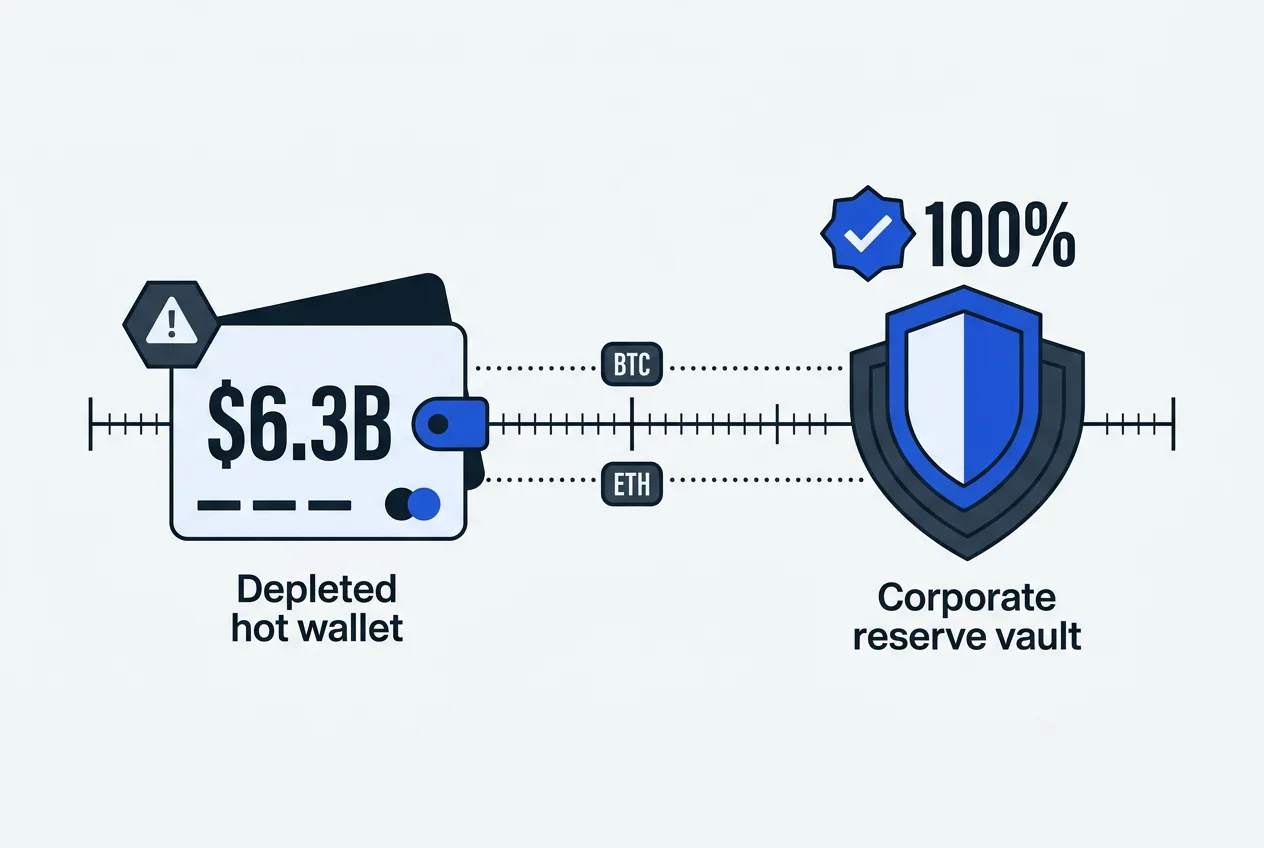
Before transferring large amounts, review the latest Proof of Reserves report on Binance’s site and confirm withdrawal processing times for your preferred network. Monitor official announcements for any updates on the independent security audit. The exchange’s decision to absorb losses and publish rapid PoR data provides concrete evidence of reserve coverage, yet the scale of the breach underscores the value of testing small transfers first.
Frequently asked questions
Did users lose funds in the October 2026 Binance incident?
No user balances were reduced. Binance covered the entire $6.3 billion loss from its own reserves and insurance funds.
When did withdrawals resume after the breach?
Phased withdrawals began on 1 November 2026, starting with Bitcoin and expanding across fifteen networks within the following days.
What is the status of the remaining stolen assets?
Issuers and partners froze roughly $2.85 billion. Recovery efforts for the remaining amount continue with law enforcement and blockchain analytics firms.
How can users verify Binance reserves now?
Binance published a new Proof of Reserves snapshot at 00:00 UTC on 31 October that covers ten major assets and includes zk-proof verification options.
TrustScope
Comments
No comments yet. Be the first!