
Airbyte security review After November 2026 RCE Vulnerability Disclosure
In short
Airbyte security review examines the critical remote code execution flaw disclosed in October 2026 and the steps self-managed users must take to reach patched versions.
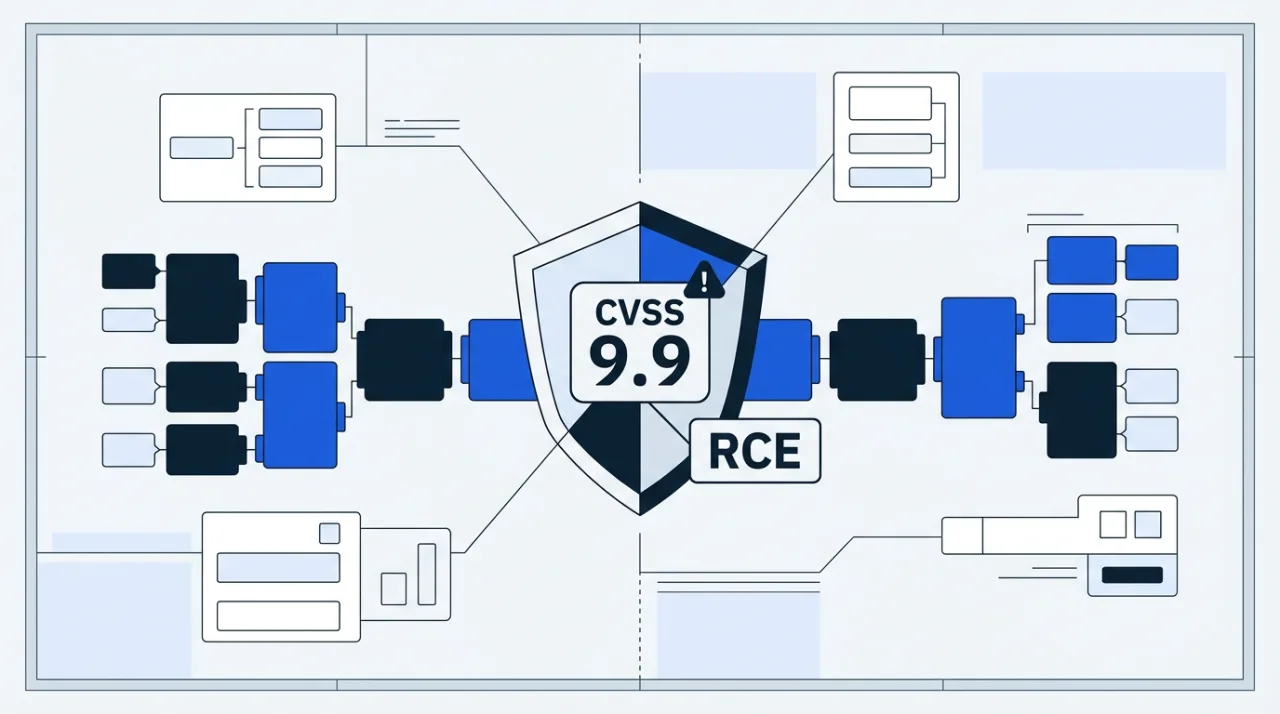
Airbyte security review shows that self-managed deployments below version 2.2.0 remain exposed to a critical remote code execution issue. The flaw, tracked as GHSA-g35w-6r6v-h4r7, allows authenticated users to run arbitrary commands through the Connector Builder and Manifest Server. Airbyte Cloud users face no risk from this advisory.
The vulnerability stems from unsafe reflection in declarative manifests, classified under CWE-470. It affects both 2.x releases before 2.2.0 and all legacy 1.x installations. In-the-wild exploitation has been confirmed by JPCERT/CC in JVN#12040144, published November 4, 2026.
Airbyte RCE vulnerability GHSA-g35w-6r6v-h4r7 explained
GitHub published the advisory on October 17, 2026 with a CVSS 3.1 score of 9.9. JVN#12040144 later rated the issue at CVSS 3.0 8.8 and CVSS 4.0 8.7. Exploitation does not require the AIRBYTE_ENABLE_UNSAFE_CODE flag to be active. Readers and higher workspace roles can trigger the flaw in the Manifest Server container.
Legacy 1.x deployments allow unauthenticated network access to the same component. Successful attacks can expose data, stored credentials, and internal services. Airbyte 1.x releases receive no patch, leaving those installations permanently at risk unless fully replaced.
Airbyte 2.2.0, released around August 10, 2026, contains the fix through updated airbyte/manifest-server 7.23.7 and airbyte-cdk 7.23.7 packages. Later releases such as 2.4.0 carry the same protection. Custom components are now blocked by default unless the unsafe-code flag is explicitly enabled.
Practical steps for affected Airbyte installations
Operators running self-managed Airbyte must first identify their current version. Any release before 2.2.0 requires immediate upgrade to the latest available build, preferably 2.4.0 or newer. Airbyte 1.x users should plan a full migration because no security updates exist for that branch.
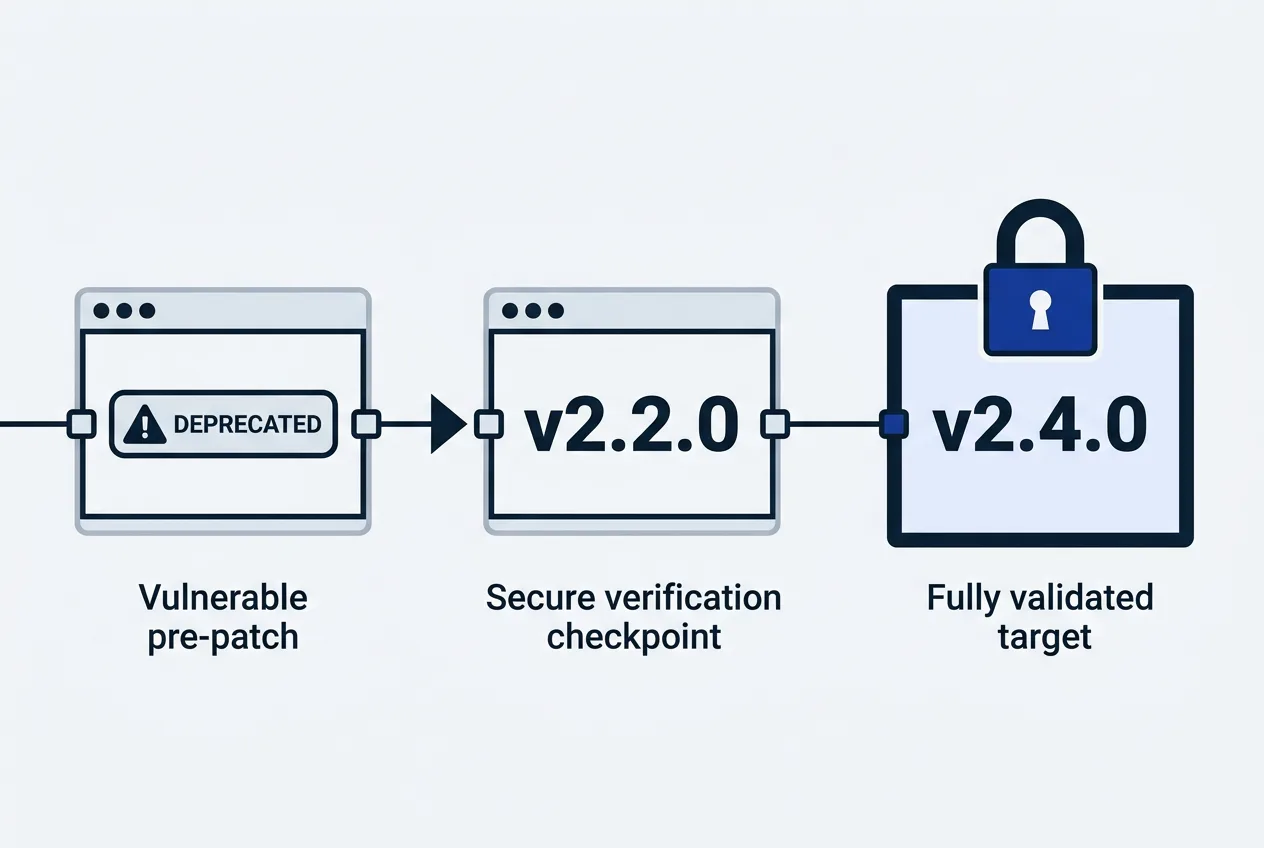
Until the upgrade completes, restrict network access so that only the core Airbyte server can reach the Connector Builder and Manifest Server endpoints. Limit Reader, Editor, and Admin roles to verified personnel and avoid enabling the unsafe-code flag in any shared workspace.
| Version range | Authentication required | Fix available | Recommended action |
|---|---|---|---|
| 1.x (all) | No | No | Migrate to 2.4+ |
| 2.0.0–2.1.x | Yes (Reader+) | Yes (2.2.0+) | Upgrade immediately |
| 2.2.0 and later | N/A | Built-in | Monitor for new advisories |
Organizations should monitor the official security@airbyte.com channel and release notes for any follow-on guidance. No additional incidents tied to this vulnerability have been reported after the initial disclosure.
Is Airbyte safe after the November 2026 advisory?
Airbyte Cloud remains unaffected and requires no changes. Self-managed users who complete the upgrade to 2.2.0 or higher restore the intended security posture. Continued operation on older versions leaves data and infrastructure exposed to the documented attack path.
Regular version checks, role reviews, and network segmentation form the baseline for ongoing safe operation. Coordinated disclosure continues through Airbyte documentation and the listed contact address.
Frequently asked questions
What versions of Airbyte are affected by GHSA-g35w-6r6v-h4r7?
All self-managed releases before 2.2.0 are affected. This includes the entire 1.x line and 2.x builds up to but not including 2.2.0. Airbyte Cloud is not impacted.
Has the Airbyte RCE vulnerability been exploited?
Yes. JPCERT/CC confirmed in-the-wild exploitation in JVN#12040144 published November 4, 2026. The GitHub advisory had already noted the critical severity on October 17.
How do I upgrade Airbyte to remove the risk?
Update to version 2.2.0 or later, with 2.4.0 recommended as the current stable release. Legacy 1.x deployments have no patch and must be replaced entirely.
What temporary measures reduce exposure before upgrading?
Limit network access to the Manifest Server, restrict Reader and higher roles to trusted accounts, and keep the unsafe-code flag disabled in shared environments.
TrustScope
Comments 7