
BTCPay Server Security Review After November 2026 Macaroon Disclosure
In short
BTCPay Server is a legitimate open-source payment processor. The November 2026 incident affected only outdated versions, and patched instances reported no drains.
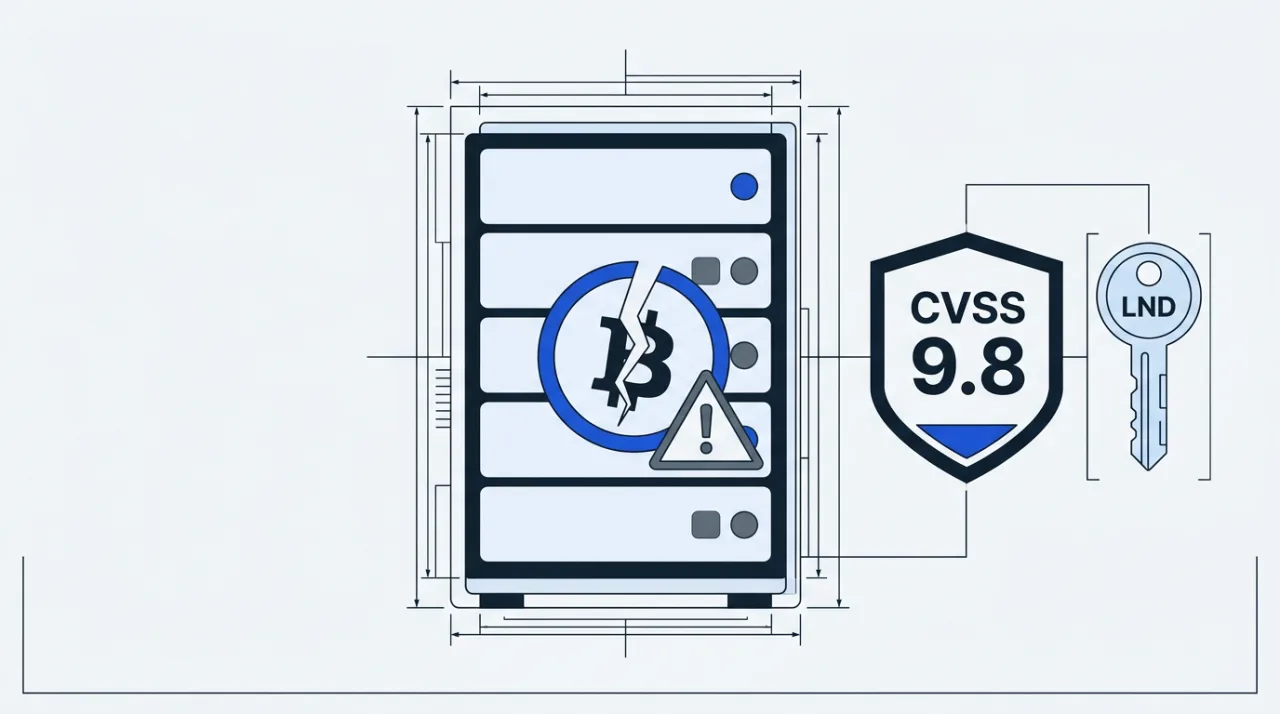
BTCPay Server is a legitimate open-source, self-hosted Bitcoin and Lightning payment processor that merchants use to accept payments without third-party fees. The November 2026 macaroon disclosure vulnerability, tracked as CVE-2026-119757, exposed LND users on versions prior to 2.4.2 to credential theft and subsequent hot-wallet drains. Updated instances faced no confirmed losses from this flaw.
BTCPay Server Security Review: Vulnerability and Timeline
The vulnerability allowed unauthenticated remote attackers to retrieve LND .macaroon files, granting full control over Lightning nodes. It carried CVSS scores of 9.8 in version 3.1 and 9.3 in version 4.0, falling under CWE categories 552 and 522. Only LND setups were at risk; other Lightning implementations and non-Lightning configurations remained unaffected.
Version 2.4.1 shipped on 23 July 2026. The fix arrived in 2.4.2 on 7 August 2026, which also upgraded LND to 0.21.1 and regenerated macaroons. Additional releases followed through October and into November, including an emergency 2.4.7 update on 29 October. On 1 November, reports of hot-wallet drains began on unpatched servers. The project identified that attacks targeted versions 2.4.1 and earlier, using the flaw later closed in 2.4.2. Independent tracing by Bitquery estimated roughly 18.38 BTC and 3,405 LTC moved across 682 transactions, with most activity on 1 November.
Project statements on 2 November confirmed no credible drains on patched versions. The CVE was published by VulnCheck on 5 November 2026. Earlier August 2026 incidents had already prompted hardening efforts around macaroon handling.
Remediation Steps for Affected Installations
Operators running 2.4.2 or newer require only routine monitoring. Anyone still on 2.4.1 or earlier must take immediate action even after updating:
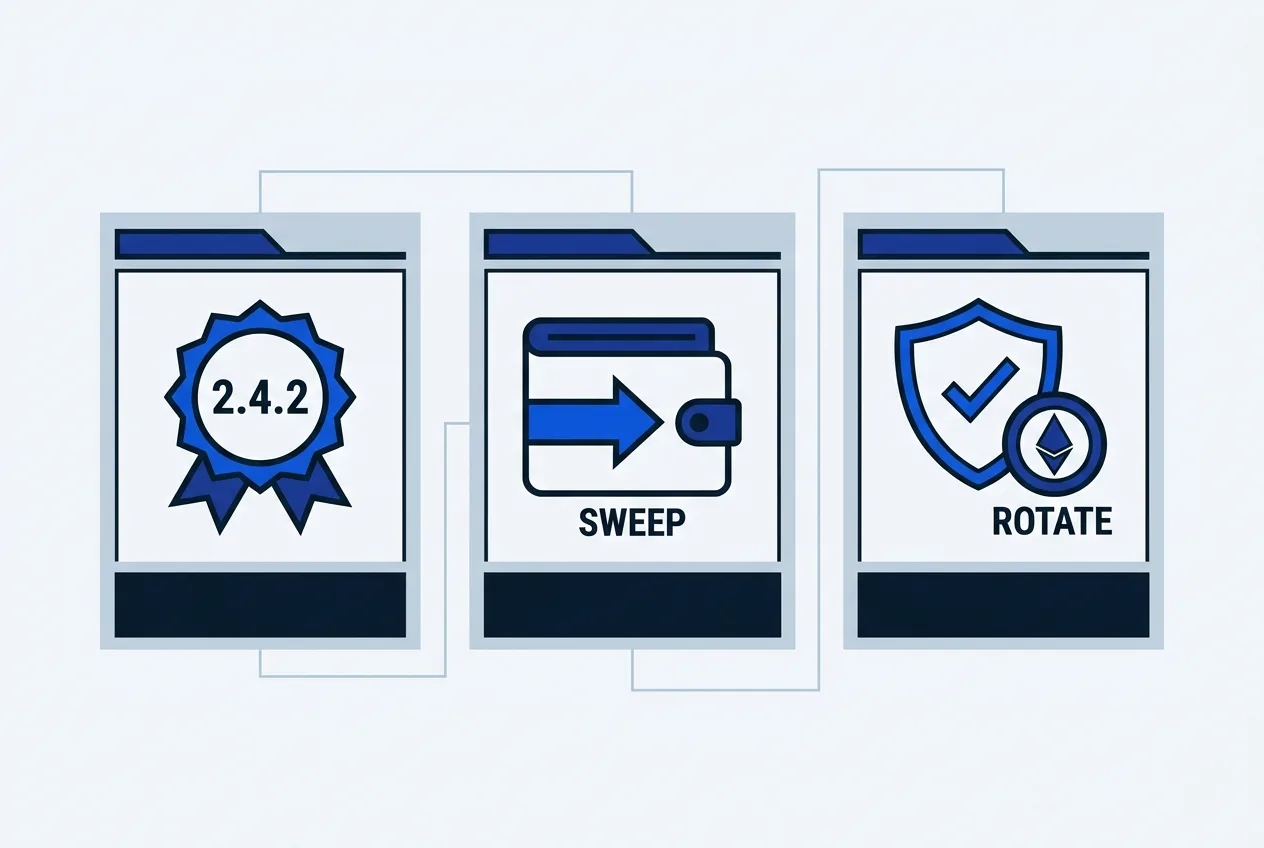
- Sweep remaining hot-wallet funds to a fresh wallet created on a trusted offline device.
- Take the existing server offline.
- Provision a new virtual machine and install the current release.
- Replace any exposed credentials before restoring services.
Funds stored in off-server wallets, such as hardware devices, were never exposed. The project directs security reports to security@btcpayserver.org and encourages local law-enforcement notification where theft occurred.
BTCPay Server Alternatives and Ongoing Risk Management
Self-hosting places full responsibility for updates on the operator. Regular patching remains the primary defense against similar automated exploits. Hosted processors such as BitPay, Plisio, NOWPayments, and CoinGate shift infrastructure management to the provider. Another self-hosted option, BitcartCC, supports additional cryptocurrencies beyond Bitcoin and Lightning.
Users evaluating BTCPay Server should verify the installed version against the official releases page and enable automated update notifications where available. No CISA Known Exploited Vulnerabilities listing existed for this issue as of 14 November 2026.
Frequently asked questions
Is BTCPay Server legit?
BTCPay Server is a legitimate open-source project maintained by an independent team. It has received consistent high scores in independent reviews for functionality and transparency.
What versions of BTCPay Server were affected by the November 2026 incident?
Only versions 2.4.1 and earlier were targeted. Instances running 2.4.2 or newer showed no confirmed losses from the macaroon disclosure flaw.
How can operators protect a BTCPay Server installation?
Apply updates promptly, sweep hot-wallet funds after any suspected exposure, and rebuild from a fresh installation when moving from vulnerable versions.
What are common BTCPay Server alternatives?
Hosted alternatives include BitPay, Plisio, NOWPayments, and CoinGate. Self-hosted options include BitcartCC for users needing broader coin support.
TrustScope
Comments 9