
GitBook Security Review After November 2026 AI-Agent Targeted Attack
In short
An attacker used an SSO flaw and AI-driven automation to reach production secrets at GitBook in early November 2026. The company contained the incident within hours and rotated keys, but users must still take specific steps.
GitBook security review shows the platform faced a narrow but serious incident on November 2, 2026. An attacker exploited a flaw in the SSO login flow to impersonate staff, reach internal repositories, and obtain a Cloudflare API key plus production secrets. The breach targeted one specific customer rather than broad data theft.
Timeline of the November 2026 GitBook Breach
The attack unfolded over roughly 16 hours of downtime. The first hijacked account at the targeted customer occurred at 12:27 UTC on November 2. Staff session access followed at 16:32, production environment entry at 17:48, and full restoration at 11:56 on November 3.
GitBook described the intrusion as sophisticated and largely automated by AI agents. Services went offline at 20:32 on November 2 after the attacker spent about three hours inside production systems. Public cached documentation remained available longer than authenticated sites.
Potentially exposed items included GitBook API tokens, integration secrets, Git Sync secrets, and session signing secrets. No customer passwords, billing data, or IP addresses were accessed, and there is no evidence that documentation content itself was altered.
GitBook Response and Required User Actions
GitBook disabled compromised service accounts, rotated all infrastructure secrets and customer-managed tokens, and fixed the SSO vulnerability. All pre-incident customer API tokens were invalidated. The company has since committed to additional hardening and monitoring upgrades.
Users must complete several steps to restore full security. These include creating fresh GitBook API tokens, rotating any third-party integration secrets, and regenerating signing keys for authenticated custom backends. Git Sync keys were rotated centrally by GitBook, so no customer action is required there.
- Re-authenticate the GitBook MCP server if it is in use.
- Review logs for the three implicated IP addresses: 94.183.188.91, 45.139.84.195, and 198.251.83.217.
- Monitor accounts connected through GitHub or GitLab integrations for unusual activity.
Some customers responded quickly. PancakeSwap moved its documentation to its own infrastructure. Trade.xyz, the primary target, reported unauthorized edits to its docs and stated plans to migrate away from the platform.
Current Status and Independent Assessment
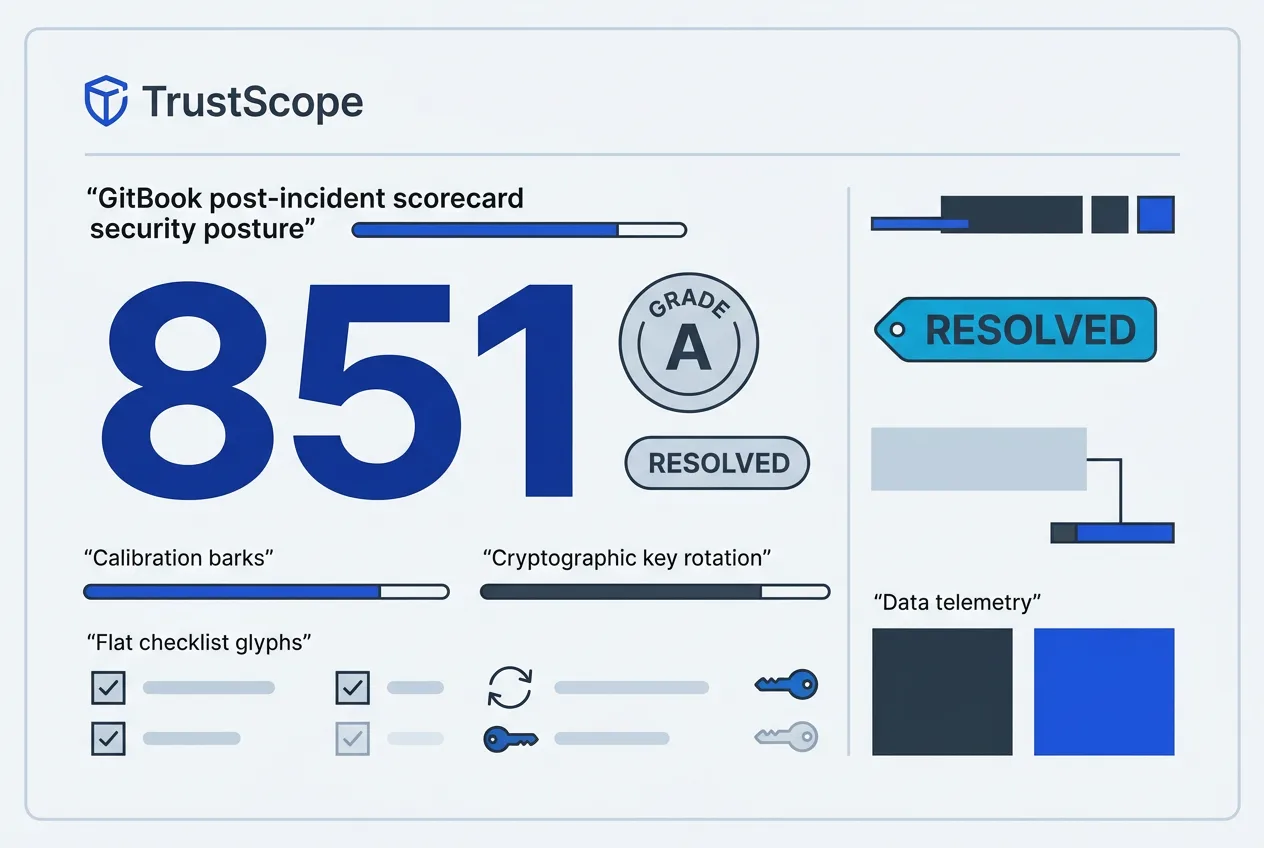
As of November 15, 2026, GitBook lists the incident as resolved and the platform operational. UpGuard maintained an A security rating of 851 out of 950 for GitBook on November 13, with only minor external encryption issues noted. No widespread exploitation of the exposed tokens has been confirmed.
GitBook plans to publish further details on the attack and its security improvements. Organizations evaluating the service should weigh the rapid containment against the need for manual credential work and the possibility of future targeted attempts on documentation platforms.
Frequently asked questions
Is GitBook safe after the November 2026 attack?
GitBook contained the breach within hours, rotated keys, and fixed the SSO flaw. Customers must still rotate their own tokens and review logs before full confidence can return.
What data was exposed in the GitBook breach?
Exposed items included API tokens, integration secrets, and session signing secrets. Customer passwords, billing information, and IP addresses remained protected.
Do GitBook users need to take action after the incident?
Yes. Users should generate new API tokens, rotate third-party secrets, and check logs for the listed IP addresses. Git Sync keys were already rotated by GitBook.
Did the attack affect all GitBook customers?
The attacker focused on one specific customer, Trade.xyz. Broader customer data was not the primary target, though platform-wide secrets required rotation.
TrustScope
Comments 12