
Mailchimp Review: Compliance Tools, Data Practices and Trust Signals
In short
Mailchimp supplies built-in compliance tools and certifications, yet users must actively manage consent and list hygiene to stay within legal bounds.
Mailchimp review findings indicate the platform equips users with practical tools for regulatory compliance while shifting core legal responsibilities onto account holders. The service, operated by Intuit since its 2021 acquisition, processes billions of emails monthly for small and mid-sized businesses through automation flows, audience segmentation, and reporting features. Data handling relies on established certifications, though recent regulatory rulings and isolated security claims require ongoing user vigilance.
Mailchimp Email Compliance Tools and User Obligations
Mailchimp includes automated features that align with CAN-SPAM requirements such as mandatory unsubscribe links, physical address footers, and audience status tracking that flags subscribed, unsubscribed, and cleaned contacts. Signup forms support double opt-in, and import processes prompt permission verification to discourage use of purchased lists. The Acceptable Use Policy, revised in September 2025, explicitly prohibits purchased lists and demands evidence of opt-in consent upon request.
Users retain full accountability for maintaining proof of consent and performing regular list hygiene. Failure to meet these standards can trigger account flags or suspensions. Guides note potential FTC penalties reaching $53,088 per violating email, underscoring why platform tools alone do not eliminate compliance risk. Regular audits of contact sources remain essential even on paid plans.
- Enforce double opt-in on all new forms
- Export consent records before major campaigns
- Review audience status reports monthly
- Document import sources for every list addition
Data Handling, Certifications and Reported Incidents
Mailchimp operates as a data processor with servers located in United States data centers. It maintains EU-US Data Privacy Framework certification, including UK and Swiss extensions, and incorporates Standard Contractual Clauses in its Data Processing Addendum. The company appoints a Data Protection Officer and supplies tools for consent logging, data export, and deletion requests. It does not sell contact information.
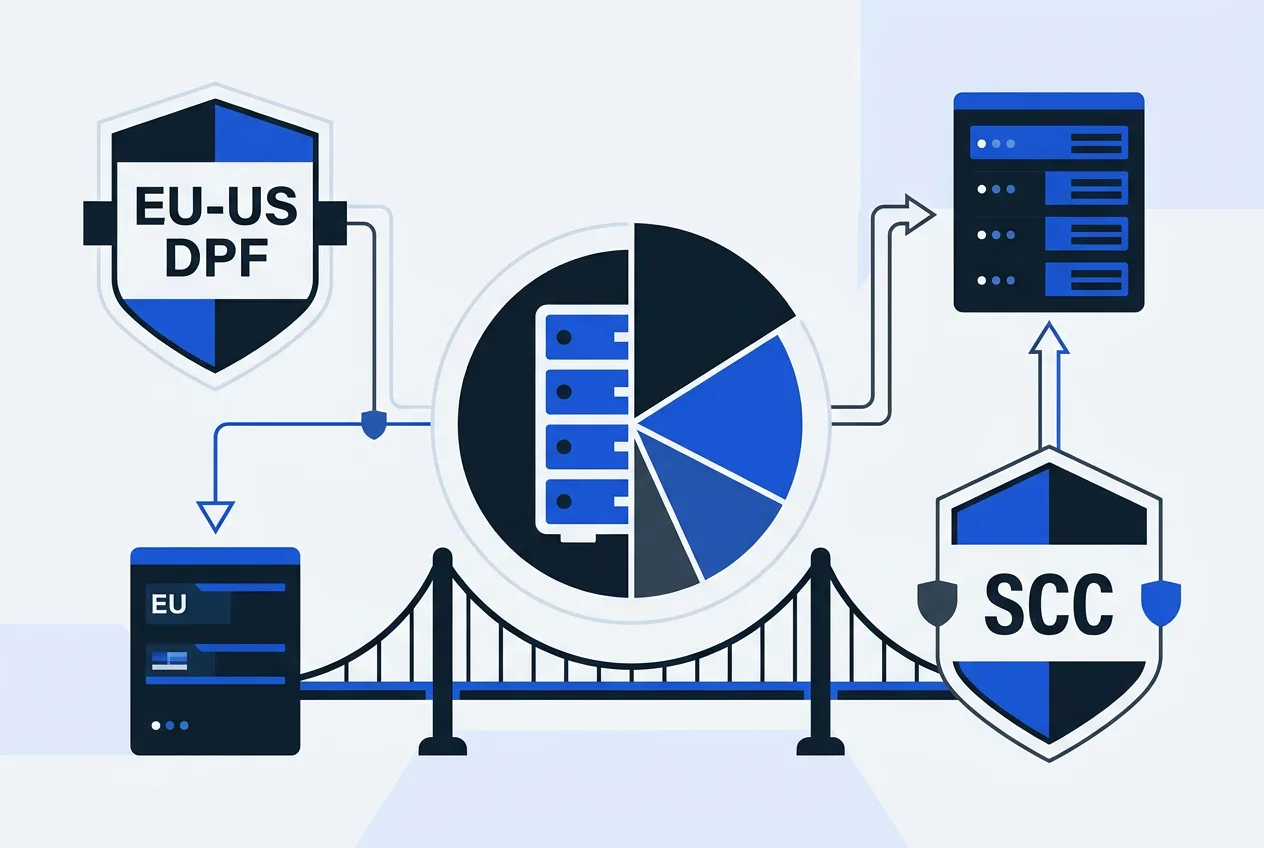
Security measures include SOC 2 and ISO 27001 certifications, TLS 1.2 encryption, hashed passwords, two-factor authentication, penetration testing, and regular backups. GDPR-related features exist, yet organizations must still conduct their own transfer impact assessments and obtain explicit consent where required. An Austrian court ruling in September 2026 determined that a 2022 newsletter transfer violated GDPR under the legal framework in place before the current Data Privacy Framework adequacy decision.
Between 2022 and 2023, reviews documented social engineering attempts against accounts. In July and August 2025, a ransomware group claimed possession of roughly 767 MB of client contact data; Intuit reported no confirmed breach or exfiltration after internal investigation, and no mandatory notifications followed. No additional systemic incidents have been verified through 2026.
| Certification | Scope | Relevance |
|---|---|---|
| SOC 2 | Security controls | Third-party audit of data protection |
| ISO 27001 | Information security | International management standard |
| EU-US DPF | Cross-border transfers | Addresses GDPR transfer concerns |
User Sentiment, Pricing Shifts and Practical Considerations
Aggregated ratings across platforms stand between 3.9 and 4.4 out of 5. G2 reports approximately 4.3 while Capterra shows 4.5, with praise directed at the intuitive builder, template library, and more than 300 integrations. Trustpilot averages 2.5 from over 1,500 reviews, citing support response times, unexpected billing changes, and account suspensions.
Pricing adjustments in early 2026 reduced the free tier to 250 contacts and 500 sends monthly. Paid plans begin at $13 for Essentials, $20 for Standard, and $350 for Premium, with costs scaling by contact count that includes unsubscribed addresses. Automation features remain limited on lower tiers. These changes have prompted some users to evaluate alternatives that separate billing from total contact volume.
Before committing, organizations should export sample data, test consent workflows, and review the current Data Processing Addendum against their specific regulatory obligations. Continued monitoring of official Mailchimp security and privacy pages provides the most reliable updates on evolving features and certifications.
Frequently asked questions
Is Mailchimp legit for business email marketing?
Mailchimp operates as a legitimate Intuit subsidiary with documented security certifications and compliance tooling. Users must still verify consent and manage their own regulatory obligations to avoid account issues.
Does Mailchimp protect contact data adequately?
The platform holds SOC 2, ISO 27001, and EU-US Data Privacy Framework certifications along with encryption and access controls. Isolated past claims have not resulted in confirmed large-scale breaches requiring notifications.
What are the main Mailchimp privacy concerns?
Concerns center on user responsibility for consent proof, contact-based billing that includes unsubscribed addresses, and a 2026 Austrian ruling on historical data transfers. No evidence shows Mailchimp sells contact lists.
How do Mailchimp user reviews compare across sites?
G2 and Capterra ratings average above 4.3 while Trustpilot sits near 2.5, reflecting differences in complaint visibility around support and billing. Aggregate scores across sources range from 3.9 to 4.4.
TrustScope
Comments
No comments yet. Be the first!